Spanish technology transforms Ukraine's old Grad rockets into precision weapons
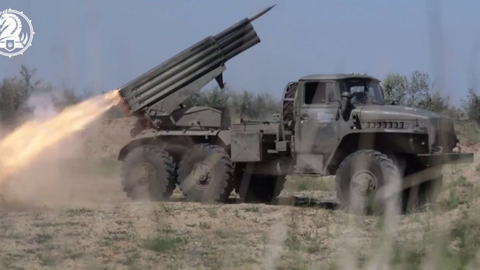
Ukraine has received technology from Spain that enables the conversion of BM-21 Grad multiple launch rocket system unguided rockets into significantly more accurate weapons. The system uses satellite and inertial navigation and functions even under strong electronic jamming. This solution could substantially increase the combat value of thousands of existing rockets.
PoliticsUkraine has received smart guidance modules from Spain that enable the conversion of old unguided BM-21 Grad multiple launch rocket system rockets into significantly more accurate weapons. Grad is one of the world's most well-known and widely distributed multiple launch rocket systems, but its primary weakness has always been the large dispersal of impacts, rockets would fly in roughly the right direction, but hitting a precise target was impossible.
Spanish gadgets change the rules of the game
The system received from Spain uses combined satellite and inertial navigation, which guides the rocket's trajectory significantly more precisely than earlier technology. Even more importantly, the newer version has the ability to function even under strong electronic jamming, this is particularly crucial in the Ukraine-Russia war, as both sides make extensive use of GPS signal disruption.
The electronic warfare environment has become one of the key issues on the front line. Russia has deployed numerous electronic warfare systems along the front lines that jam both drones and rocket guidance. The addition of inertial navigation means that a rocket can reach its target even when satellite signals are completely blocked.
New life for thousands of rockets
The real impact of the change lies not merely in the deployment of the new system, but in the fact that Ukraine has thousands of old Grad rockets in storage that have so far been usable only for large-area bombardment. Now they can be converted into precision weapons, capable of hitting specific military targets, supply depots, or vehicles.
The BM-21 Grad dates from the Cold War era; the system was taken into service in the Soviet Union in 1963, and has been distributed worldwide. Ukraine has access to both its own stocks and ammunition received from other countries. Installation of precision modules is a relatively straightforward process that does not require rebuilding the rocket itself.
Impact on the battlefield
Military technology experts have emphasized that the availability of precision weapons is one of the decisive factors on the battlefield. While previously destroying a single fortified point target required dozens of unsuccessful strikes, with a precision module the same result can be achieved with far fewer rockets, meaning fewer losses to civilian infrastructure and preserved ammunition supplies on a larger scale.
Spain's involvement in arming Ukraine has so far been more modest compared to the UK, France, or the US, but this step demonstrates NATO allies' continued desire to give Ukraine battlefield advantages, using existing arsenals to their fullest potential.
Open in app →