Swedes held up Estonia as a bad example: Russian-owned real estate poses NATO threat
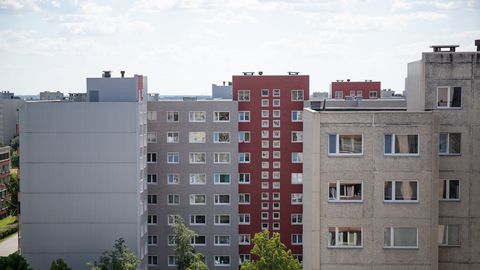
On 19 June, Sweden's influential daily newspaper Dagens Nyheter published a comprehensive article highlighting Estonian real estate owned by Russian citizens as disproportionately abundant. Legal experts warn that international private property protection standards could become a tool in Russia's hands to obstruct the implementation of NATO Article 5. Isamaa MP Andres Kraas writes that the situation represents a ticking security threat.
OpinionSweden's Dagens Nyheter is one of the most influential morning newspapers, Dagens Nyheter, published on 19 June an extensive investigative article analysing real estate owned by Russian citizens in EU member states. Estonia was singled out in the article as a country where the problem is particularly acute.
International law serving the Kremlin
Lawyers and security experts warn that existing international legal instruments protecting private property worldwide, including laws applicable in Russia itself, have become a potential strategic weapon in the hands of the Kremlin. Theoretically, these norms could give Moscow a legal lever to cast doubt on the implementation of NATO Article 5 collective defence in a situation where EU member states would need to take measures against property owned by Russian citizens.
Experts emphasise that this is not merely an economic question. Real estate owned by Russian citizens in strategically important areas, such as border regions, near ports or alongside critical infrastructure, could take on an entirely different meaning in a conflict situation.
Estonia is in a worrying position
Andres Kraas (Isamaa) draws attention to the fact that the amount of real estate owned by Russian citizens in Estonia is strikingly large in an EU context. This is a situation that has developed historically and whose danger has not been taken sufficiently seriously to date. Kraas emphasises that this is not an abstract threat in the future, but a ticking problem today.
The publication of the Swedish newspaper's article shows that the issue has begun to attract wider attention in Europe, and the fact that Estonia is brought forward as a specific bad example should be a wake-up call to both the government and the Riigikogu.
What should be done?
Kraas points to the need to reassess how EU states should treat strategically important assets owned by citizens of hostile regimes. This requires clear political decisions both at the Estonian level and through pan-European coordination before crisis forces action in haste and unreasonably.
Open in app →