Taagepera: If current trends continue, the future will resemble the feudal age
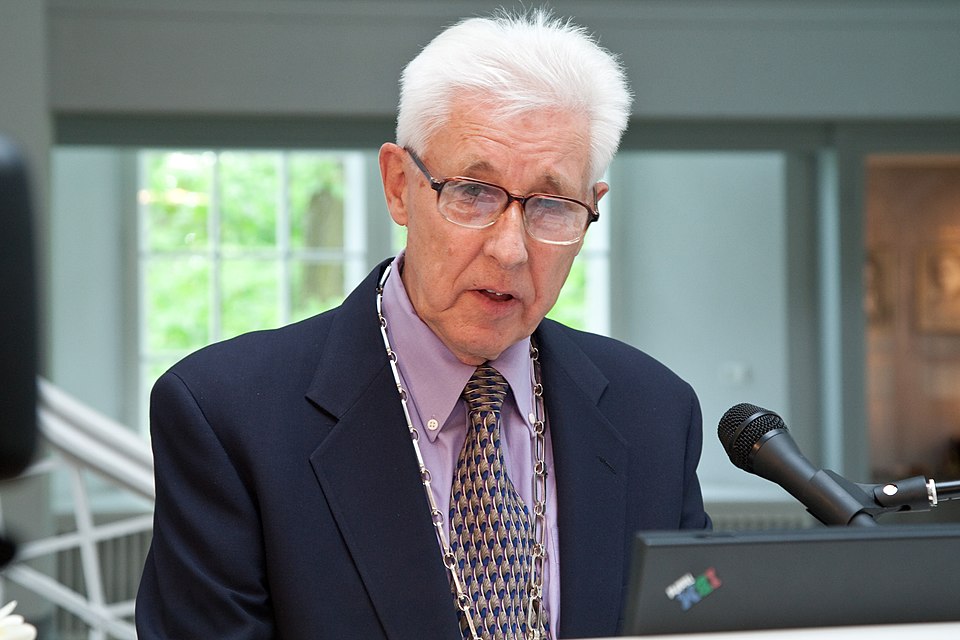
Rein Taagepera, a 93-year-old pioneer of quantitative political science, warns that if current trends continue, global network-based neo-feudalism will replace the nation-state. The scholar, who lives in Tartu, argues that consumer religion is colliding with planetary boundaries, artificial intelligence is accelerating dangerously, and humanity must accept that each generation may not live better than the last.
OpinionThe 93-year-old political scientist Rein Taagepera, who lives in Tartu, searches for patterns spanning millennia behind the numbers, and in his assessment, humanity has reached a transformative turning point whose outcome could be shocking.
Neo-feudalism is at the door
In Taagepera's view, the nation-state is not history's endpoint. "Feudalism has been distasteful to me almost my entire life. Yet the medieval patchwork of overlapping kingdoms, where state overlapped with state, created a network that in some ways resembles today's world," he explains. A global network has emerged against which even great powers are helpless, and this may be our future.
Oligarchs no longer need to buy people's votes with money: brainwashing suffices. "Right now we can afford the luxury of reason moving out of its proper place without facing direct punishment," Taagepera acknowledges. A wealthy society can afford bad decisions, and this is precisely what makes democracies fragile.
Consumer religion versus planetary limits
Taagepera calls consumer culture the world's main religion: people are pressured into needing to buy ever more, travel more, and replace functioning things with newer versions. This belief system, in turn, collides with rapidly dwindling resource availability. "Regardless of what the official religion or ideology is, from here all the way to India, the dominant faith is still consumer religion," he notes.
At the same time, the scholar warns that humanity must accept that endless progress is not a human right. "The expectation that everything will always get better actually makes us unhappier," he says. Taagepera describes himself as an "optimistic pessimist", his expectations are so low that if next year is simply not much worse than this one, that brings satisfaction.
Artificial intelligence is coming too fast
The political scientist takes an ambivalent view of artificial intelligence. It is not inherently bad, but it develops at far too rapid a pace. "What has happened over ten years should have taken a hundred years. That way humans would have had time to digest it and avoid harmful consequences," Taagepera explains.
Artificial intelligence is backward-looking; it systematically reproduces what has already been established, and it lacks genuine foresight. Making sense of quantitative models requires human thinking: "Garbage in, garbage out, but I have seen many cases where excellent data goes in and garbage comes out anyway."
Estonia as a unique experiment
On Estonia, Taagepera has a clear message: our nation has been given a "mission on a silver platter." "Looking at it from a distance, it would be entirely natural to assume that what we have achieved is impossible to achieve, to create our own culture, translate world literature, surpass our weight class in world-leading science by a factor of a hundred," he says.
A nation with a million inhabitants has a mission to show the world how a small language community can maintain a functioning state, preserve a culture, and sustain creativity spanning from encyclopedic knowledge to world-class music. "We are interesting to the world in our mild absurdity," Taagepera observes.
Historical cycles and decline
Taagepera's analysis of 5,000 years of world history shows that around 500 BC, global population growth reached its peak and then declined by approximately ten per cent. Now humanity is moving toward a new plateau, and the scholar does not rule out repetition. "If the previous pattern repeats, there will be a sharp decline a hundred years from now," he cautions, though he adds that history never repeats in exactly the same form.
Taagepera is confident that a hundred years from now he will be among the five most remembered political scientists of today, but whether his parliamentary size model, or "the square root of the population", will still hold depends on whether the parliamentary system even exists.
Open in app →