Tamme-Lauri Oak in Võrumaa: Over 700-Year-Old Living History
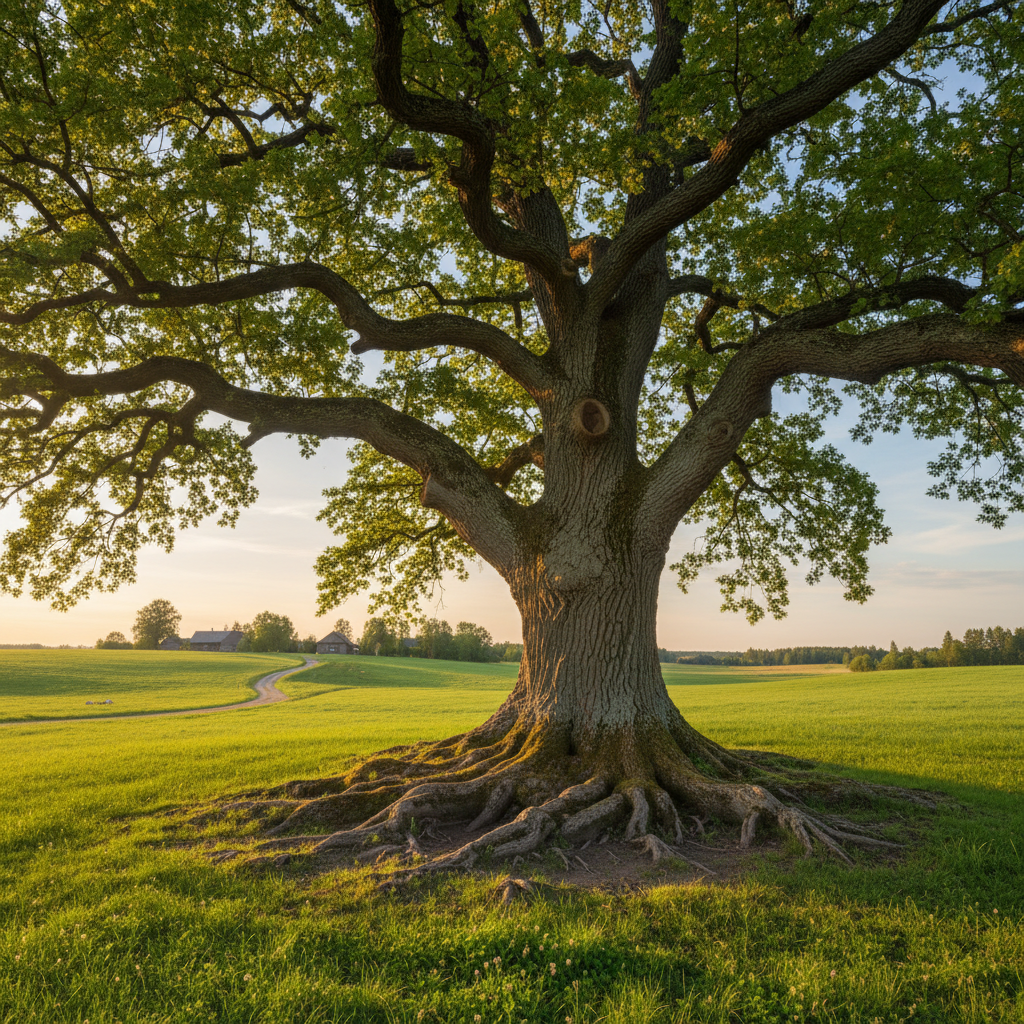
The Tamme-Lauri oak growing in Urvas, Võrumaa, is Estonia's oldest and thickest tree, estimated to be over 700 years old. With a circumference of over eight metres, this giant is an extraordinarily valuable natural monument both scientifically and culturally. The tree has been a symbol of Estonian national identity for centuries and even graced the 50-kroon banknote.
EstoniaIn Urvas, Võrumaa, on the land of Tamme-Lauri farm, grows a tree that has witnessed the most important turning points in Estonian history: the Tamme-Lauri oak. Regarded as Estonia's oldest and thickest tree, this giant is estimated by dendrochronologists to be more than 700 years old, meaning it germinated in the 14th century, a time when the Livonian territories were a constant battleground of power struggles.
Gigantic Dimensions and Folk Tradition
The Tamme-Lauri oak's trunk circumference extends over eight metres, making it one of the most imposing trees in the entire Baltic region. Over the years, it has endured lightning strikes, storms, and human interference, yet has remained vital despite all this. In Estonian folk tradition, the large oak has held special significance; according to legend, the tree is connected to subterranean forces that ensure the region's fertility and wellbeing, and within its trunk have dwelt various protective spirit entities.
As a cultural symbol, the Tamme-Lauri oak has found its way into Estonian currency, with the tree's image adorning the former 50-kroon banknote. It has been a silent witness to deportations, wars, and Estonia's restoration of independence, which is why it is regarded as an embodiment of national continuity.
Science and Conservation
From a scientific perspective, it is remarkable that the tree's heartwood has become hollow over time-a natural process in old trees, as nutrients move primarily through the outer layers of the trunk. In 1970, extensive conservation work was carried out, during which tonnes of decayed wood were removed from the hollow interior. During the work, old objects and traces of human activity were found within, indicating that the oak has provided shelter for centuries past.
Today, the Tamme-Lauri oak is under constant scientific supervision. Specialists monitor the health of its root system; around the tree, a special area has been established to prevent soil compaction. The tree is equipped with a lightning protection system, and the hollow is checked regularly to prevent the spread of pests and fungi. Additionally, the impact of microclimate is assessed through the colour of leaves, growth increment, and overall vitality.
Visiting and Nature Conservation
The Tamme-Lauri oak is a popular tourist destination, open to visitors in every season. In spring, the surroundings offer verdant greenery, while in autumn there is a beautiful play of colours. The tree is ideally situated for those wishing to explore Southern Estonia's rolling landscape and historic estates.
Visitors are asked to respect marked boundaries to protect the root system and to refrain from climbing the tree and scratching its trunk. Estonia is home to other venerable old trees, such as the Kärstna oak and the Pühajärve war oak, but the Tamme-Lauri oak has achieved the most iconic status thanks to its size and history.
The story of the Tamme-Lauri oak is a reminder of the importance of nature conservation. A tree that has survived seven centuries embodies both nature's resilience and people's ability to cherish living history in their midst.
Open in app →