Teet Korsten: It's time to speak openly about Estonia's occupation trauma
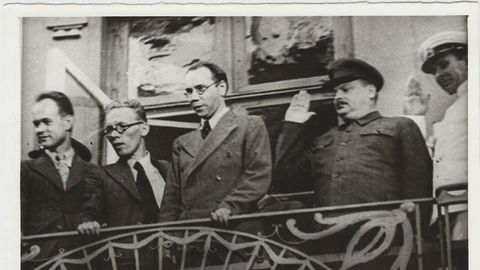
Journalist Teet Korsten writes about Estonia's collective occupation trauma and how the Soviet period has left deep wounds in society. According to him, therapy has not even begun, and the path out of subjugation requires conscious work on oneself. Yet he emphasizes that healthy nationalism is nothing to fear.
OpinionAfter a workshop in Tallinn, Teet Korsten met with Tiiu, who identifies humility as one symptom of collective trauma among Estonians. Tiiu cited a workshop participant who said simply and directly: "We are actually still slaves."
Korsten highlights a paradox: liberation from slavery carries its own danger-the freed may themselves become enslavers. This half-conscious recognition could, in his view, generate a backlash that produces precisely the humble submission often observed.
The wilderness wandering is not yet over
The author asks rhetorically how long the wilderness wandering lasts-the journey that leads a people out of slavery. For the Jews under Moses, it lasted 40 years, but Estonia's has not ended even by 2031, he argues, because therapy has not even begun. Ulo Nugis's famous hammer blow in 1991 gave Estonia only the opportunity to begin realizing its freedom, not freedom itself.
Given that the Soviet occupiers deliberately destroyed the elite and a large part of it left as refugees into exile, Korsten finds that Estonians have actually fared extraordinarily well. Tiiu herself, born in a refugee camp in Germany, embodies that exile.
Healthy nationalism is not a threat
Korsten reflects that Estonia's small population perhaps protects us from the dangers that come with nationalism, but there is no reason to fear healthy nationalism that is not directed against anyone. He points to Jüri Adams as someone who has repeatedly articulated this sense of national identity clearly.
Yet from the earliest days of independence, Estonians have been discouraged from such nationalism. Foreign authorities, such as Max van der Stoel, came to take the measure of morality. Korsten recalls his first journey outside the Soviet Union in May 1991, when he met with church pastors in the Hamburg region.
Open in app →