The 2026 FIFA World Cup: What to know about football's biggest tournament
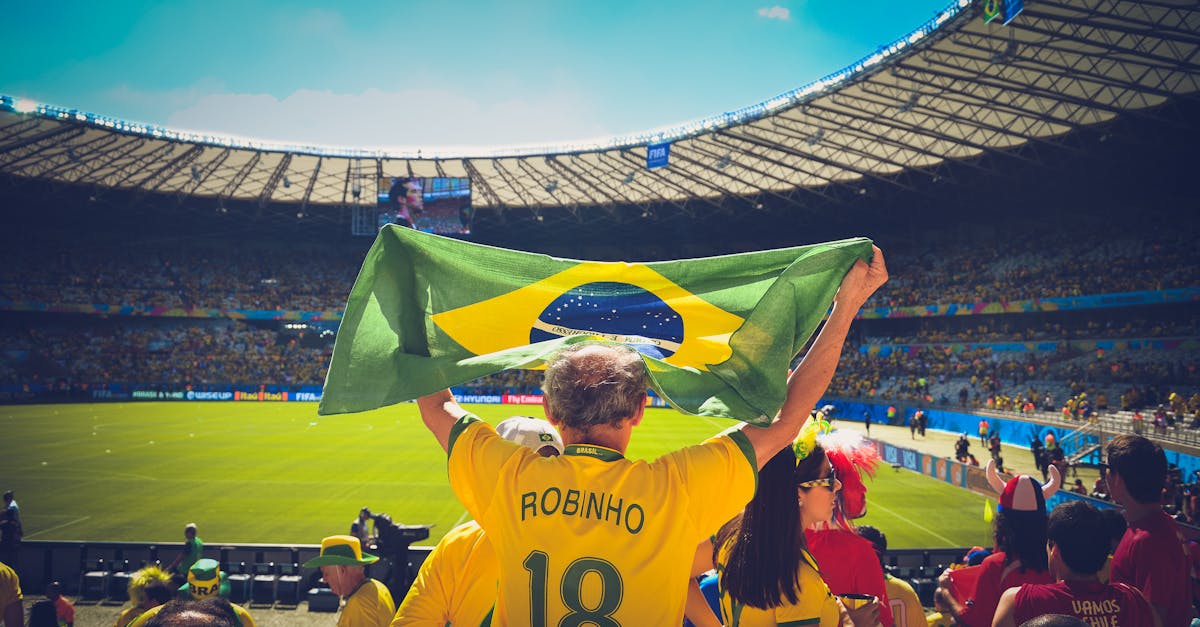
For the first time in history, the FIFA World Cup will be hosted across three countries-the United States, Canada, and Mexico-in 2026. The tournament will expand to 48 teams, up from the traditional 32, and introduce a new group-stage format. Here's what you need to know about the competition, how it will work, and why it matters for global football.
SportWhat is the FIFA World Cup?
The FIFA World Cup is the international championship tournament of men's association football, held every four years since 1930. It is the most-watched sporting event on the planet. During the tournament, 32 national teams (expanding to 48 in 2026) compete across several weeks to determine a global champion. The tournament combines group stages, knockout rounds, and a final match that typically draws over a billion viewers worldwide.
The World Cup is governed by FIFA (Fédération Internationale de Football Association), the international governing body for football. The tournament is more than a sporting competition-it shapes national pride, generates enormous economic activity, and often becomes a focal point for global culture and diplomacy during its month-long duration.
A historic expansion: three hosts, 48 teams
The 2026 World Cup will be unprecedented in several ways. For the first time, three nations will jointly host the tournament: the United States, Canada, and Mexico. This reflects both logistical necessity and an effort to distribute hosting duties and economic benefits across North America.
Equally significant is the expansion from 32 to 48 teams-an increase of 16 nations. This makes qualification more accessible for smaller football federations and brings more countries into the tournament for the first time. The 2022 World Cup in Qatar featured 32 teams; 2026 will be substantially larger.
The decision to expand was made by FIFA in 2017. The three-country hosting arrangement was confirmed in 2018, with FIFA selecting this configuration over a joint bid from Morocco, and bids from a consortium of South American nations.
The tournament format: how it will work
With 48 teams instead of 32, the group stage structure has changed. The tournament will be organized as follows:
- 12 groups of 4 teams each (rather than 8 groups of 4). Each team plays three matches in its group.
- Top two teams from each group advance to a round of 16, giving 32 teams in the knockout stage.
- From the round of 16, the format mirrors previous tournaments: quarter-finals, semi-finals, and the final.
- The matches will be spread across three countries with games held in designated stadiums across the US, Canada, and Mexico.
This format changes the dynamics of group-stage football. With 12 groups, qualification becomes slightly more complex: not all third-place teams can advance, introducing new strategic considerations for coaches and players.
Where will matches be held?
The United States will host the vast majority of matches-roughly 60 percent of games-reflecting its larger population, existing stadium infrastructure, and proven ability to host major sporting events. Mexico and Canada will each host a smaller share of matches.
No final venues had been officially confirmed as of early 2024, though the US has over 20 professional football stadiums capable of hosting World Cup matches, including the SoFi Stadium in Los Angeles, AT&T Stadium in Arlington, Texas, and MetLife Stadium in New Jersey. Mexico has historic World Cup experience, having hosted the tournament twice (1970, 1986). Canada, hosting for the first time, will use its largest multi-purpose stadiums.
The distribution of matches across three time zones and three countries will create logistical complexities for fans, media, and teams-a first for the modern World Cup.
Key institutions and governance
FIFA remains the ultimate authority, setting rules, selecting match schedules, and overseeing competition integrity. FIFA is headquartered in Zurich, Switzerland.
The US Soccer Federation, Canadian Soccer Association, and Mexican Football Federation serve as the respective national organizing bodies and liaisons with FIFA.
Each country's government and local authorities are responsible for security, infrastructure, visas, and public safety during the tournament.
LOC (Local Organizing Committees) in each nation handle venue logistics, transportation, accommodation, and fan experience planning.
Qualification: how teams earned their spots
Qualification for 2026 began in 2023 and will conclude in 2025. Unlike previous tournaments, the expanded field means more nations can qualify:
- South America and North America/Central America have a higher allocation of qualifying spots due to geography and football strength.
- UEFA (Europe) will send the largest number of teams from a single confederation.
- Africa, Asia, and Oceania also receive allocated spots, scaled to regional competitiveness and federation size.
Estonia, a small Nordic nation, will compete in European qualifying but faces stiff competition from larger footballing nations and will need exceptional performance to reach the tournament.

Why 48 teams instead of 32?
FIFA's expansion rationale included several factors:
- Inclusivity: More nations get a chance to compete on football's biggest stage, increasing global participation and interest.
- Commercial opportunity: More matches mean more broadcast revenue and ticket sales.
- Regional balance: Expanding the field reduces the advantage held by traditional powerhouses, theoretically giving smaller nations better odds.
- Growth markets: Hosting in North America, with its large immigrant populations from football-mad regions, increases potential viewership.
However, critics argue the expansion dilutes competitive quality, making group stages less intense and adding matches that may not feature the sport's best teams.
Current state: preparations underway
As of 2024, preparations are advancing:
- Stadiums are being evaluated and upgraded to meet FIFA standards.
- The three host nations are coordinating on security, transportation, and accommodation frameworks.
- FIFA is finalizing match schedules and group assignments (typically announced closer to the tournament).
- Qualification tournaments across all six continental confederations are progressing toward completion by late 2025.
Mexico and the US have modern football infrastructure from hosting regional tournaments and hosting Major League Soccer (MLS) franchises. Canada, with fewer professional stadiums, is undertaking expansion and renovation projects.
Why this matters for Estonia
While Estonia is unlikely to qualify for 2026 given the strength of European competition, the tournament's expansion and North American location have indirect relevance:
- Diaspora connections: Tens of thousands of Estonians and Estonian-Americans may travel to matches or follow games with heightened interest due to North American proximity.
- Broadcasting and culture: The World Cup dominates global media attention for a month, and Estonia's broadcasters will cover the tournament extensively.
- Youth football development: Tournament formats and competitive patterns influence how youth football academies structure training and competition elsewhere, including Estonia.
- Nordic pride: If Nordic neighbors (Sweden, Norway, Denmark, Finland) qualify, Estonian media and fans often follow regional developments closely.
Common misconceptions
Misconception 1: All matches will be equally competitive. With 48 teams, some group matches will feature significant skill imbalances. Early matches between weaker and stronger teams may be less competitive than in previous tournaments, though this also creates dramatic comeback opportunities.
Misconception 2: The three-country format will create logistical chaos. While complex, the three-country format is manageable. Modern transportation and communication infrastructure allow seamless coordination. The 1994 World Cup in the US and 2002 World Cup in South Korea/Japan both involved cross-border logistics without major disruptions.
Misconception 3: Teams will be randomly divided into groups. FIFA uses a seeded draw to balance groups competitively, preventing all strong teams from clustering in single groups. The process is transparent and televised globally.
Misconception 4: Canada and Mexico will have empty stadiums. Both nations have passionate football cultures. Canada's growing football popularity and Mexico's historic football tradition mean strong attendance is likely, though the US will probably see larger crowds due to higher stadium capacity and wealth.
What to watch next
Key milestones approaching 2026:
- Completion of qualification rounds (late 2025): All 48 teams will be determined, including any surprise qualifiers.
- Group draw (typically 6-12 months before tournament): Teams will learn which group they're in and which opponents they'll face.
- Venue and schedule finalization: FIFA will announce the complete match schedule across all three countries.
- Ticket sales: Public ticket sales usually open 12-18 months before the tournament, creating a rush for popular matches and finals tickets.
- Stadium preparations: Final upgrades and security infrastructure will be completed.
- Team preparations: National squads will begin their final training camps and warm-up fixtures.
The 2026 World Cup represents a significant evolution in how football's premier tournament operates. The expansion to 48 teams and three host nations signals FIFA's intent to globalize the competition further and increase its commercial reach. Whether this expansion enhances or diminishes the tournament's competitive quality and fan experience remains a matter of debate among football analysts and enthusiasts worldwide.
Open in app →