The Telegraph: New Iranian Supreme Leader Mojtaba Khamenei Faces Difficult Times Ahead
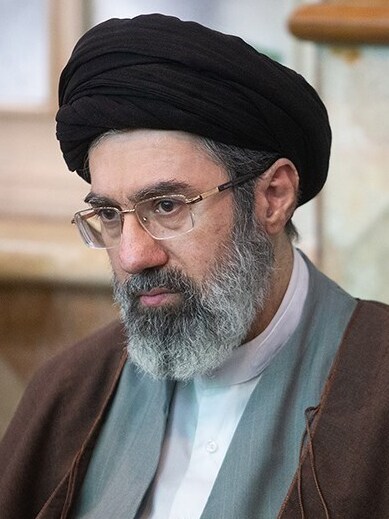
The British newspaper The Telegraph analysed the situation of Iran's new supreme leader Mojtaba Khamenei, finding that although he inherited his father's title, his power rests on uncertain ground. Khamenei must contend with growing IRGC influence, an economically devastated state, and build new loyalty networks for himself.
PoliticsThe British newspaper The Telegraph published a detailed analysis of Iran's new supreme leader Mojtaba Khamenei, whose real struggle for power is only just beginning, and a difficult battle awaits him especially following a possible peace agreement.
Military influence grows
Generals of the Islamic Revolutionary Guard Corps (IRGC) are now more influential than ever before. They firmly believe that their actions alone prevented the Iranian regime's collapse. Now they make decisions without consulting the elected civilian government, placing serious pressure on the young Khamenei's authority.
The Telegraph's sources, current and former Iranian officials, warn that the economic situation is catastrophic. "An economic tsunami is on the way. IRGC generals make decisions without consulting the elected civilian government, and there is rivalry emerging over billion-dollar projects aimed at rebuilding the state," the sources told the newspaper.
According to the constitution, the supreme leader has the final word, but in reality his power depends on whether the armed forces take him seriously. It remains unclear whether the generals will respect the younger Khamenei. One Iranian official acknowledged change already underway: "Previously there had to be discussions with various people and centers, but now there are fewer of them. When a general says something now, it becomes an order."
Dismantling old networks and building new ones
Khamenei has begun actively replacing his father's inner circle with his own allies. His primary goal is to gain control of the office of the supreme leader (Beit), an institution that employs thousands of people across Iran and which The Telegraph calls the regime's "nervous system". In addition, he seeks to seize control of intelligence agencies and the security apparatus.
In this regard, Mojtaba is following his father's example: Ali Khamenei seized power in 1989 and then gradually sidelined key figures, also reorganising IRGC leadership.
Mohsen Sazegara, one of the founders of the IRGC, warns that this process could trigger a sweeping purge. "This would be a significant step, because judicial chief Gholam-Hossein Mohseni Ejei has his own network," he said, pointing out that a change in judicial leadership would not be straightforward or painless.
Ghalibaf, the most difficult rival
Particularly complicated for Khamenei is his situation with parliament speaker Mohammad Bagher Ghalibaf, who is connected to the IRGC's first generation and controls extensive loyalty networks. Sazegara explained: "If Mojtaba wants to consolidate power and Ghalibaf opposes him, eventually he will have to remove Ghalibaf. If Ghalibaf does not step back quietly, things could become messy."
Sidelined officials could rally around clerical institutions, which are centres of power that even the supreme leader cannot fully control.
Weaker position than his father
Mojtaba Khamenei is in a significantly more vulnerable position than his father was in 1989. Ali Khamenei was a revolutionary and close ally of Ruhollah Khomeini, founder of the Islamic state, with historical legitimacy that his son simply does not possess. Meanwhile, Iran stands on the brink of an economic precipice, meaning the new supreme leader must prove his governing ability in an especially difficult situation.
Open in app →