Tõnu Esko: University rankings are a useful map, but a poor compass
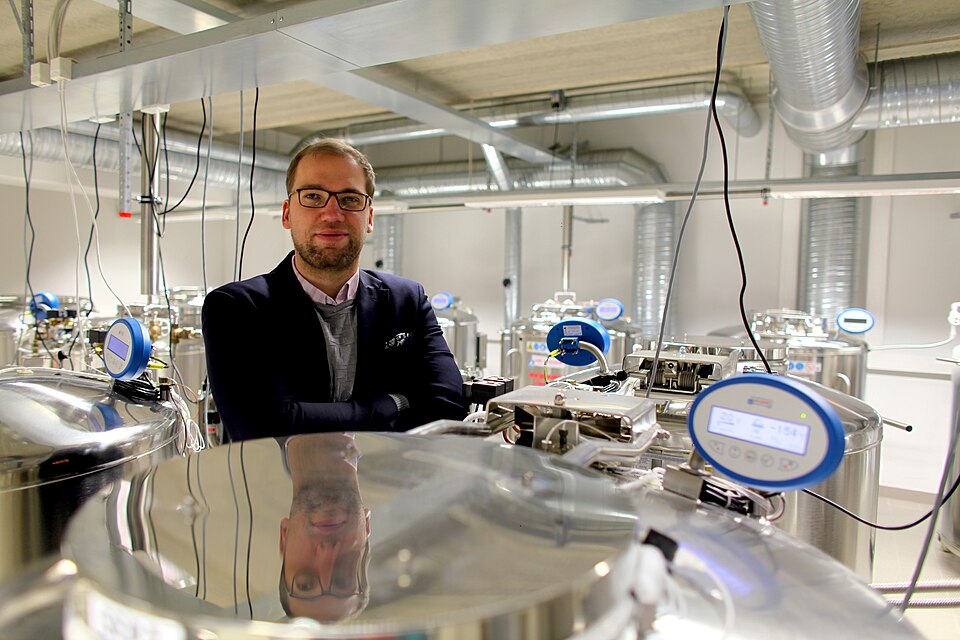
University rankings have become a kind of currency in higher education, but relying on them to steer institutions can lead to distorted priorities. Tõnu Esko argues that while rankings offer a useful lens on international visibility, they cannot capture what truly makes a university valuable, especially a national university like the University of Tartu.
OpinionTõnu Esko argues that news about international university rankings appears year-round, and their influence has grown so large that rankings have become a kind of currency in the world of higher education. That is precisely why it is worth asking what a university's rise or fall in any given table actually reveals, and what it does not.
Rankings compress complexity into a single number
General university rankings force very different phenomena into a single composite score. Depending on the methodology, that score aggregates research publications, citation rates, reputation surveys, staff-to-student ratios, international diversity metrics, alumni careers, and industry partnerships. The implicit assumption is that institutions serving very different purposes can be ranked on one universal scale. But teaching quality, societal impact, responsibility for national culture, industry collaboration, and the nurturing of the next generation of researchers cannot honestly be collapsed into a single number.
Different rankings also measure different things using different methodologies, making their results not directly comparable. In the QS World University Rankings 2026 methodology, reputation-related indicators account for nearly half the final score, meaning roughly half the result rests on a survey in which researchers and employers around the world rate universities based on their own knowledge and experience. Times Higher Education weights research environment and quality more heavily. Some tables prioritise alumni achievements or the share of graduates reaching the boards of global firms. Each ranking therefore describes universities not only from a different angle, but through a different set of value choices and rules.
Estonia's real strengths are hidden in subject tables
General rankings also tend to obscure subject-level excellence. Estonia's genuine peaks show up far more clearly in discipline-specific tables, in European Research Council (ERC) grants, in international research consortia, and in strong research groups. A glance at QS subject rankings reveals how much a general table can hide: the Estonian University of Life Sciences ranks among the world's top 100 in agriculture and forestry, the Estonian Academy of Arts in visual arts, and the Estonian Academy of Music and Theatre in performing arts.
Esko also points out that several influential rankings are owned by consultancy firms that offer universities paid advisory services on improving their ranking positions. That does not make the tables worthless, but it does require reading them critically, looking not only at the result, but at who is measuring, what is being measured, and what is left out.
The Finland comparison
A comparison with Finland is instructive. The University of Helsinki typically sits around the top 100 globally, while the University of Tartu usually falls between 300 and 400. Both are old national universities, both teach in their state language, both cover almost all scientific disciplines, and both operate in countries with small populations. The key difference is investment: Finland's total spending on research and development exceeds three percent of GDP, while Estonia's figure remains below two percent. That gap translates directly into laboratory capacity, professorships, doctoral positions, and international project participation, and ultimately into visibility.
What rankings cannot see
What remains invisible in rankings is the work a national university does in its own language and for its own society. An Estonian-language monograph, the translation of an influential research text, or the steady development of national humanities disciplines may carry enormous significance for Estonian culture and education, but it does not register internationally.
Estonia's standing in ERC grants tells a more reliable story than fluctuating rank numbers. ERC grants are Europe's most prestigious and competitive research funding. University of Tartu researchers have received more than twenty ERC grants in total. In 2025 alone, ERC funding was awarded to three Tartu researchers at the advanced investigator level, one at the starting researcher level, and additional researchers from Tartu and the Estonian University of Life Sciences at consolidator level. These results give a more concrete and credible picture of Estonian science than shifting rank positions, because here reputation surveys, historical brand, and table visibility count for nothing, only the ambition of the idea, the scientific strength, and the researcher's capacity to execute it.
A metric must not become the goal
Esko concludes that a university must not make substantively wrong decisions merely to look better in rankings, and equally must not avoid right decisions simply because they weaken its ranking position. He cites the example of doctoral students at the University of Tartu, who have been reclassified from student status to academic staff, gaining social guarantees and greater security. This is a deliberate choice to strengthen the pipeline of future researchers, correct from the perspective of the young scientist, doctoral education quality, and the sustainability of the entire research system, yet it weakens Tartu's position in some tables.
«A metric is valuable as long as it helps us understand reality. When the metric becomes the goal, it begins to distort reality,» Esko writes. What truly matters in a national university, science in the Estonian language, cultural responsibility, the development of future generations, societal impact, does not fit neatly into any ranking's columns.
Open in app →