Toyota's Future City Woven City Fuji: High-Tech, Empty of People
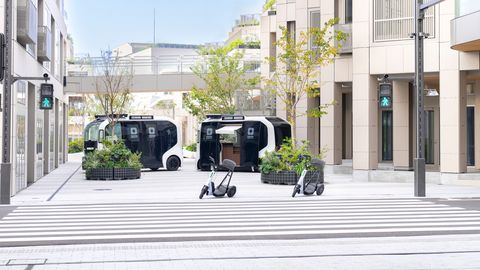
Toyota Woven City, an experimental city built at the foot of Mount Fuji in Japan, is designed to test future mobility and robotic solutions in real-world conditions. Although the city features gleaming new buildings and electric buses circulating quietly, the streets remain eerily silent and many systems are still struggling. From journalist Tim Levin's visit, it emerges that the futuristic city is home to only a handful of people.
TechnologyToyota Woven City is located at the foot of Mount Fuji in Japan and represents the ambitious attempt by the world's largest automaker to build a real city for testing technology. Journalist Tim Levin visited this so-called future city for Inside EVs and describes a place that resembles more of a futuristic demo environment than a living settlement.
Robots, buses and silence
First impressions are striking: new buildings gleam in the sun, quiet electric buses move around, and robots attempt to practice folding laundry and delivering packages. Yet precisely where life should be bustling, an eerie silence prevails; the streets have so few people that the city's experimental nature becomes immediately apparent.
Woven City is currently home to only a handful of people who are essentially living test subjects for new smart infrastructure and mobility solutions. Every street, intersection and building is designed to provide data and learning material, but the question is whether such an artificial environment can deliver answers relevant to real life.
Struggling systems and unexpected problems
Many Woven City systems are still in development and are struggling. This is not a source of embarrassment for project managers, but rather the goal itself: unexpected failures and problems are valuable learning material that cannot be created in a controlled laboratory. Toyota's logic is simple: if something goes wrong in a small experimental city, the cost is far lower than if it happens in real life affecting thousands of users.
The question that runs through journalist Levin's reporting, however, is weighty: how much real life can fit into a technological playground where everything is incomplete? Human behaviour is unpredictable, and even a carefully designed environment may not account for how people actually move, interact and live.
Which ideas will go further?
Woven City's greatest question is not technical, but related to scalability: which solutions will ever be able to leave the laboratory and be implemented in real cities? Toyota is investing a substantial sum in the project, but the outcome remains uncertain. Experimental cities are not a new idea; similar projects have been attempted in South Korea and on the Arabian Peninsula, but most have remained technological showrooms.
Woven City could be the birthplace of Toyota's next major breakthrough. Or it could be an expensive lesson in the fact that a city cannot be built around a single experiment.
Open in app →