Ukraine and US discuss two-stage ceasefire plan as war enters day 1577
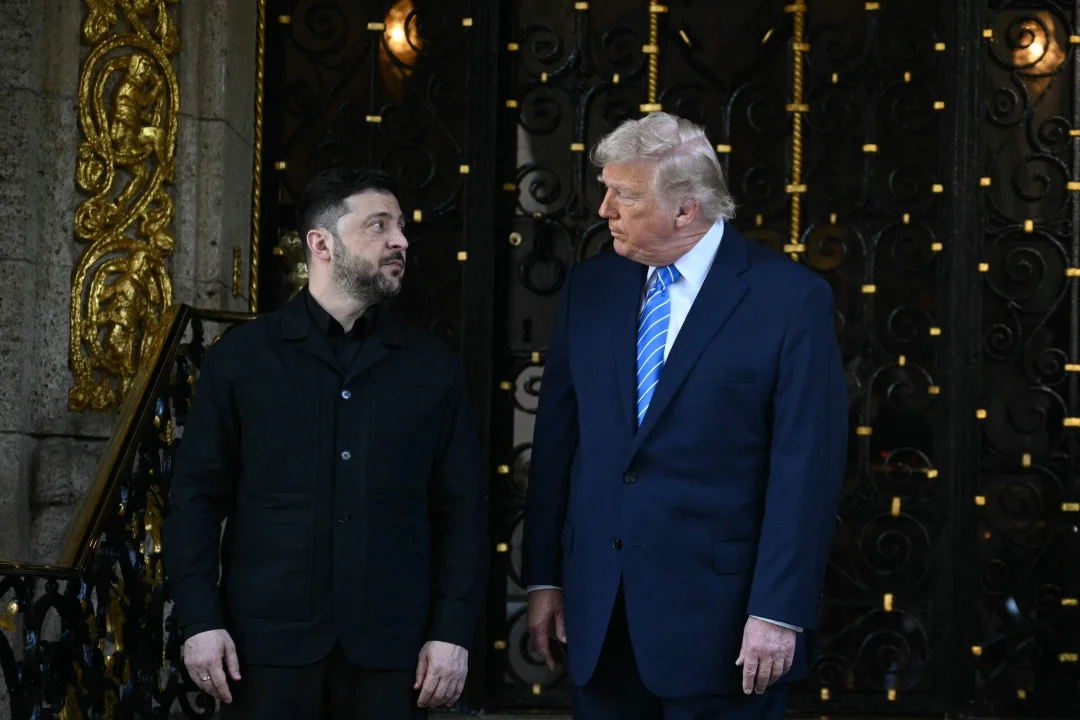
According to The Economist, Ukraine and Donald Trump's team are in daily contact discussing a potential two-stage ceasefire with Russia, including a demilitarised buffer zone of 50-70 km on both sides of the front line. Meanwhile, Russia carried out a new attack on Kharkiv injuring at least nine people, Ukraine launched a major drone strike on Moscow, and EU leaders extended sanctions against Russia for a full 12 months for the first time. Estonia's Interior Minister Igor Taro called for urgent action on drone defence at a Baltic Sea security ministerial in Helsinki.
PoliticsFriday, 19 June 2026, marks day 1,577 of Russia's full-scale war against Ukraine. The day brought a flurry of significant diplomatic and military developments, from ceasefire talks reported by The Economist to new Western aid pledges and escalating drone and missile exchanges.
Two-stage ceasefire plan on the table
The Economist reports that Ukraine, the United States and Russia are engaged in renewed informal contacts aimed at achieving a ceasefire. According to the magazine's sources, Ukraine and Donald Trump's team are in daily communication and are exploring various options for halting hostilities.
One proposal under discussion is a two-stage ceasefire model. In the first phase, military activity would be restricted within a 50-70 kilometre zone on both sides of the front line. That would then be followed by a broader agreement on ceasefire conditions or a peace process.
However, Ukrainian officials are sceptical about Russia's true intentions. One senior Ukrainian official told The Economist that the Kremlin may be deliberately dragging out talks until at least next spring, hoping that winter pressure, including large-scale missile and drone strikes on Ukraine's energy infrastructure, will weaken Kyiv's negotiating position. The same official suggested Russia may not make any significant moves before October, and could be seeking to influence US domestic politics in the process. Neither Ukraine, Russia nor the United States has officially confirmed the buffer zone plan.
Volodymyr Zelensky stated that Ukraine's goal is to end the war before the coming winter through diplomacy and increasing international pressure on Moscow. He said a combination of political, economic and military pressure could create conditions for ending the war, but acknowledged Ukraine must also prepare for the possibility that fighting continues through the cold months.
Kharkiv struck again, Moscow hit by drones
Russia launched a new overnight attack on Kharkiv, Ukraine's second-largest city, injuring at least nine people and damaging more than 40 residential buildings. Kharkiv Mayor Ihor Terekhov said the strike hit the Kholodnohirskyi district at around 3:30 a.m. local time, with Ukrainian air force warnings of glide bomb use preceding the attack.
Ukraine responded with one of the largest drone strikes on Moscow since the full-scale war began in 2022. Zelensky described the attack as a direct response to a Russian missile strike on a historic monastery complex in Kyiv earlier in the week. Ukrainian drones reportedly hit a large oil refinery in the Moscow region and caused disruptions at a Moscow airport. Russian Foreign Minister Sergei Lavrov announced that Moscow would respond with regular, massive strikes on Ukrainian military and strategic targets.
In the Moscow oblast, Governor Vorobyov confirmed that an 8-year-old girl was killed in the Ukrainian drone strike in Zhukovskiy, where she had been at home with her grandmother. A total of 18 apartment buildings were damaged across the region.
Western allies pledge $4 billion at Ramstein
At the Ramstein format meeting in Belgium, Western allies pledged approximately $4 billion in new military aid to Ukraine, according to Ukrainian Defence Minister Mykhailo Fedorov. The package focuses primarily on air defence, drones and artillery.
Nearly $1 billion will be channelled through Ukraine's Priority Urgent Requirements List (PURL) to procure Patriot air defence system missiles, with Germany, Norway, the Netherlands and Sweden among the largest contributors. German Defence Minister Boris Pistorius announced $200 million for air defence ammunition and another $200 million for PAC-3 interceptor missiles.
The United Kingdom separately announced a £752 million (~$1 billion) aid package including 150,000 drones, over 350 air defence missiles and radar equipment. The Netherlands pledged an additional €500 million, half of which, €250 million, is earmarked for drone capability. Norway, Denmark, Spain, Lithuania and Luxembourg collectively committed $540 million for long-range artillery ammunition.
EU extends Russia sanctions for 12 months
In a significant step, EU member state leaders agreed to extend economic sanctions against Russia for 12 months, double the previous six-month renewal cycle. The move signals that Brussels is not prepared to ease pressure on Moscow despite tentative diplomatic contacts. Latvia's Prime Minister Andris Kulbergs was blunt about the prospects of talks: «First of all, there must be someone on the other side who is ready for peace. Unfortunately, nobody on that side wants peace. There is no point in communicating if the other side [Russia] does not want [peace],» he said.
Baltic ministers push for drone defence network
At a Baltic Sea regional interior security ministers' meeting in Helsinki on 17-18 June, representatives from Estonia, Finland, Sweden, Denmark, Norway, Germany, Poland, Latvia and Lithuania agreed on the need to jointly develop drone detection and counter-drone capabilities. A joint declaration adopted at the end of the meeting warned that rapidly evolving security conditions and malicious use of unmanned systems pose a growing threat to public safety and critical infrastructure.
Estonian Interior Minister Igor Taro used his address to call for immediate action. «We cannot afford to wait. We cannot wait for the start of the next EU budget period or the first loss of life in a drone attack. The necessary surveillance and counter-drone networks must be built now,» Taro said. He added that the drone threat does not respect borders, and that an attack on one country is a threat to the entire region. Estonia has publicly estimated that approximately €250 million in investment is needed in the coming years for drone surveillance and countermeasures for internal security purposes alone.
Russian activist killed in Poland, suspect arrested
Polish authorities arrested a 36-year-old man travelling on a Georgian passport in connection with the killing of Robert Kuzovkov, a Russian activist known for sharply criticising Vladimir Putin. Kuzovkov was shot on Monday in Poland. Investigators are examining whether the suspect had ties to a foreign intelligence service. Polish Prime Minister Donald Tusk said the case appears to be a political murder and that Russia could be behind it. Polish officials had previously offered Kuzovkov state protection, which he had declined.
Russian military losses
Russia's cumulative combat losses between 24 February 2022 and 19 June 2026 are estimated at approximately 1,389,420 personnel (+1,370), 12,040 tanks (+2), 24,783 armoured infantry fighting vehicles (+4), 44,298 artillery systems (+58), and 359,557 combat drones (+1,968).
Open in app →