Ukraine overwhelms Russia's air defences with massive drone swarms
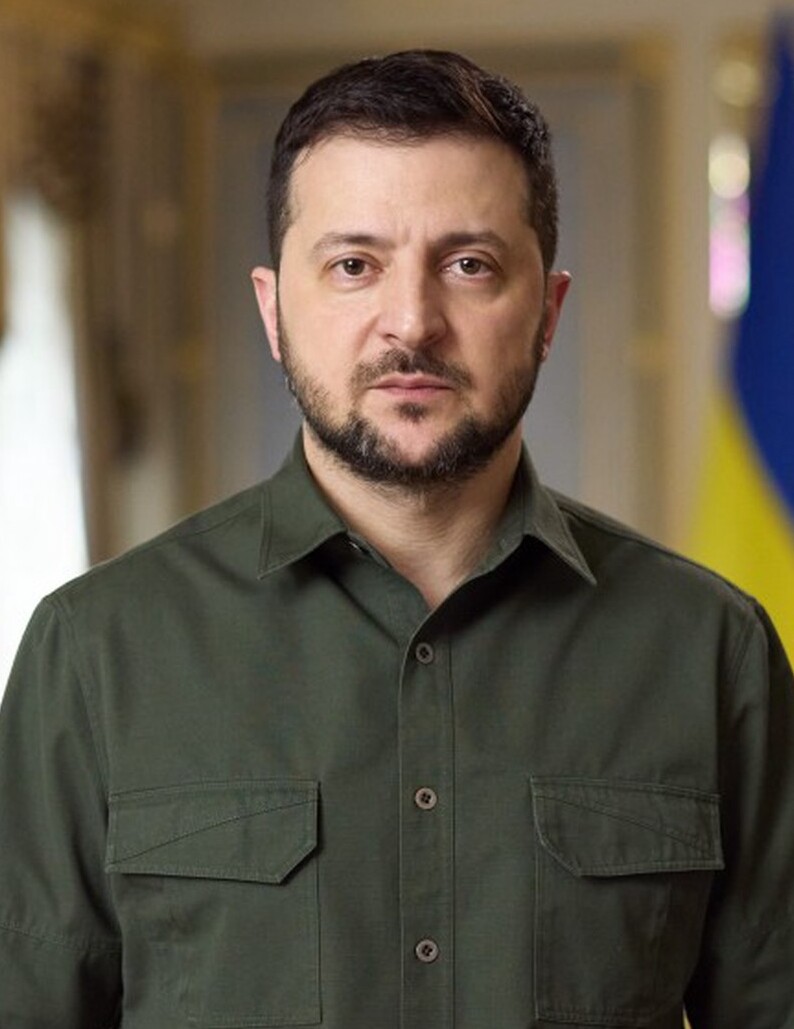
Thursday's large-scale Ukrainian drone attack on Moscow, the biggest since the full-scale war began, exposed critical weaknesses in Russia's air defence network, according to a CNN analysis. At least 11 civilians were killed across Ukraine in Russian strikes over the past 24 hours. President Volodymyr Zelensky declared that Ukraine is effectively NATO's second army.
PoliticsUkraine has developed a strategy of overwhelming Russia's air defences with massive drone swarms, and Thursday's large-scale attack on Moscow, the largest since the full-scale invasion began in February 2022, demonstrated that this approach is working, CNN reported on Friday, 19 June 2026.
Chaos Over Moscow
When a Ukrainian drone swarm reached Moscow in the early hours of Thursday, Russia's response looked more like scrambling than a coordinated air defence operation, CNN noted. Videos filmed on the capital's streets captured the confusion. In footage verified by CNN and analysed by defence experts, soldiers could be seen firing shoulder-launched anti-air missiles from the side of a busy highway while civilian cars carefully drove past just metres away.
In another video, a Russian air defence missile appeared to miss its target entirely and instead struck an oil storage facility on the outskirts of Moscow, sending a massive column of smoke into the sky and blowing the roof off a tank. The Kapotnya oil refinery in south-east Moscow, targeted for the third time in a month and the second time this week, set the sky black with smoke. Residents in surrounding neighbourhoods later reported black oily rain falling from the sky, with social media videos showing dark droplets coating surfaces.
«Russia's older systems have a history of not being 100% reliable,» said Markus Schiller, a senior researcher at the Stockholm International Peace Research Institute (SIPRI).
A Strategy of Dispersal
Since 2024, Ukraine has steadily escalated long-range strikes against Russian oil refineries and military targets. It has breached St Petersburg's air cover and repeatedly struck Moscow, bringing the war to Russia's two largest cities.
Stu Ray, senior analyst at intelligence firm McKenzie Intelligence Services, said the footage of shoulder-launched systems being fired on a busy road demonstrated an unprofessional response. «The lack of control over traffic and the use of military weapons in the immediate vicinity of civilians and vehicles confirms this assessment,» he said.
At the start of the war, Russia concentrated much of its air defence capability along the Ukrainian border and front line. Ukraine countered with a strategy of targeting a wide range of sites, both in Russian-occupied Ukrainian territory and inside Russia itself, forcing Moscow to spread its systems thin and weaken the defensive network.
Ukraine's armed forces say they have destroyed 166 Russian air defence elements this year alone, and more than 1,430 since the full-scale invasion began.
Systems Not Built for Drones
Thomas Withington, a research fellow in military sciences at London's Royal United Services Institute, noted that Russia's air defence systems were originally designed to intercept aircraft, ballistic missiles and cruise missiles, not large drone swarms.
«It is quite clear that Russia's air defence is not suited for this task,» Withington told CNN. «These systems are not capable of adequately detecting, tracking and countering such attacks. Unless a very thorough overhaul takes place, this problem will persist.»
He added that international sanctions have made it harder for Russia to access the technology needed to develop new systems. «Even if production is scaled up, they are simply producing more missile systems that cannot do the job,» he said.
The growing drone threat even forced the Kremlin to scale back the Victory Day parade on Red Square in May, with military hardware not displayed, the defence ministry citing the «current operational situation».
Experts acknowledge that Russia still manages to shoot down the majority of Ukrainian drones. Russia's defence ministry reported destroying 216 Ukrainian drones in the past 24 hours, and Ukraine's drone forces commander Robert Brovdy estimated in mid-May that Moscow was protected by more than 100 air defence missile launchers and over 50 mobile Pantsir systems. But when Ukraine launches more than 100 drones in a single wave, some inevitably reach their targets. Modern drones are also harder to track than aircraft or large missiles.
«They may appear on radar, but detecting an object and getting quality tracking data are two completely different things,» Withington explained. «Repelling hundreds of drones approaching from different directions requires extraordinarily good coordination from Russia's integrated air defence systems. Right now, that simply is not working.»
Civilian Toll Across Ukraine
While Ukraine struck deep into Russian territory, Russian forces continued to hammer Ukrainian cities. At least 11 people were killed and 63 wounded across Ukraine over the past 24 hours.
In Dnipropetrovsk oblast, three people were killed including an eight-year-old girl in Pavlohrad, with 18 others wounded. Kharkiv oblast saw one killed and 15 wounded, including four children. In Donetsk oblast, two people died in Mykolaivka and Kramatorsk. Kherson oblast reported one dead and nine injured, including victims from a drone attack on a bus and pedestrians.
Two civilian cargo ships, sailing under Panama and Saint Kitts and Nevis flags, were also struck by Russian drones after departing Ukrainian Black Sea ports, according to Odessa oblast governor Oleh Kiper. One crew member was killed and five others were wounded across the two vessels.
Ukraine's air force said Russia launched 90 Shahed-type attack drones overnight, of which 79 were destroyed. Nine reached their targets across eight locations.
Zelensky and the Diplomatic Front
Ukrainian President Volodymyr Zelensky used the occasion to make a pointed declaration about Ukraine's military standing. «Ukraine today has de facto NATO's second army, which is not inferior to the world's second army. That is why we are the ones NATO needs. This is already a fact acknowledged by all leaders,» he said.
Zelensky reported that nine countries confirmed resource allocations for Ukraine's priority needs programme PURL at a Ramstein format meeting. «And these are more than one billion euros' worth of missiles for Patriot systems,» he said, adding that the EU unanimously agreed to tighten sanctions against Russia and that additional F-16 fighter jets had been agreed upon.
Zelensky also warned that Putin has no intention of stopping. «All his talk of wanting peace is a lie. All partners and all Europeans sense this. But everyone is certain that together we will stop this. The key is to stop it together,» he said. He added that Putin fears his own army returning home without a victory, and that without a ceasefire backed by concrete security guarantees, Russia will return to war, «and this time, others could come under attack.»
Ukrainian Foreign Minister Andri Sybiha was equally blunt: «Putin did not simply miscalculate in attacking Ukraine. He made a historic mistake. Every month he refuses to acknowledge this and end this war, the situation only gets worse for him and his regime.»
Ukraine's armed forces assessed that Russia lost approximately 1,370 soldiers in the past 24 hours, bringing total estimated Russian losses since February 2022 to over 359,557 troops/soldiers, 108,886 vehicles and 1,881 multiple-launch rocket systems.
Open in app →