Who is Estonia's most famous and successful artist of all time?
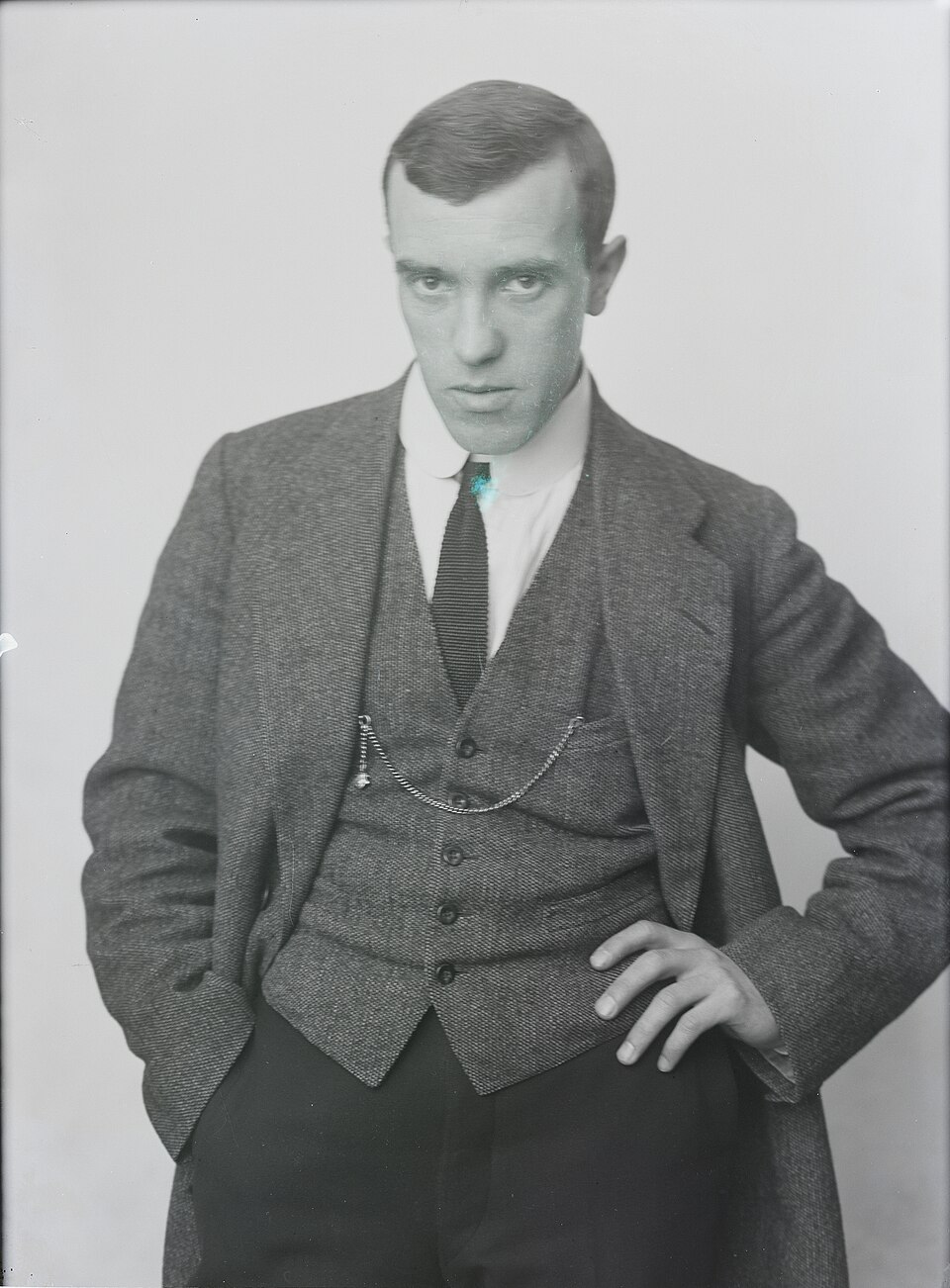
Estonia's art world has produced figures whose work has transcended geographic and cultural boundaries. While the country boasts a rich visual tradition, two names consistently rise above the rest: painter Konrad Mägi and graphic artist Eduard Wiiralt. Both have become inseparable from Estonian national identity and cultural memory.
CultureEstonia's art scene has, over the centuries, proven far richer than its small size might suggest, producing artists whose work has crossed geographic and cultural borders to earn international acclaim. But when asked who the single most famous Estonian artist is, one name comes up more than any other.
Konrad Mägi: The National Icon
Konrad Mägi is, by most measures, the artist most closely identified with Estonian national identity. He was not simply a painter, he was a visionary who transformed the Estonian landscape, particularly the rolling hills of southern Estonia and the rocky coastlines of the islands, into something almost mythical. His bold use of colour, vivid oranges, deep blues, and intense greens, created a visual language that many Estonians today instinctively regard as the "true" face of their homeland.
Mägi's life was dramatic and marked by constant inner searching. He travelled to Paris, Norway, and Italy, drawing inspiration from expressionism and fauvism, yet his soul remained firmly rooted in the northern temperament. His paintings of Lake Pühajärv or the juniper thickets of Saaremaa are not merely landscapes, they are emotional states, suffused with longing and spiritual calm. Mägi was also one of the founders of the Pallas art school, directly shaping an entire generation of Estonian artists who followed him.
Eduard Wiiralt: Master of the Line
In the field of graphic art, the undisputed giant is Eduard Wiiralt. Where Mägi speaks through colour, Wiiralt communicates through fine lines and deep psychological observation. His most celebrated works, "Hell" and "Cabaret" among them, are technically so accomplished that viewers find it hard to believe a human hand produced such density of detail.
Wiiralt was a wanderer and a bohemian who spent long years in Paris and later in Morocco. His art frequently explores the darker sides of human nature: the grotesque, the existential, the unsettling. It is precisely this capacity to capture the complexity of the human condition that keeps his work resonant for contemporary audiences. Reproductions of his prints adorn countless homes, offices, and museums across Estonia, embedding his name deeply in the national cultural consciousness.
How Does an Artist Become a National Symbol?
Cultural longevity is not simply a matter of talent. Several factors determine whether an artist's name endures across generations. First, inclusion in school curricula guarantees that young Estonians encounter these names early. Second, media coverage, journalism and documentary film, builds myths around artists' lives, making them feel personally accessible. Third, the reproducibility of a work matters: images that translate well onto postcards, book covers, and interior décor lodge themselves in collective visual memory. Finally, international recognition amplifies domestic reputation: when an Estonian artist is shown in the world's major galleries, their standing at home rises automatically.
Contemporary artists such as Kris Lemsalu and Katja Novitskova have carried Estonian art onto the global stage, representing the country at prestigious Venice Biennales. Yet when the average Estonian is asked to name the country's most famous artist, the answer almost invariably remains with the classics. This reflects a simple truth: artistic fame requires time to sediment in a nation's memory. The great historical figures have passed the test of generations, entering school textbooks and national symbolism in ways that contemporary artists, however celebrated, have not yet had time to do.
The Future of Estonian Art
The question of who is Estonia's greatest artist is never static. While Mägi and Wiiralt currently hold the top positions without serious challenge, new chapters are being written constantly. In today's digital world, access to art has changed fundamentally: high-resolution digital reproductions and virtual exhibitions allow audiences to study Mägi's colour transitions or Wiiralt's needle-fine lines without leaving home, broadening interest in Estonia's artistic heritage.
New generations of Estonian artists draw inspiration from both masters, interpreting those influences in their own ways and ensuring that Estonia remains present on the world cultural map. If the question is posed again in ten years, the list of names may well be longer, but Mägi and Wiiralt are likely to remain at its summit. They are the foundation upon which everything that follows rests.
Open in app →