Why Can't Even the Most Powerful Hurricanes Cross the Equator?
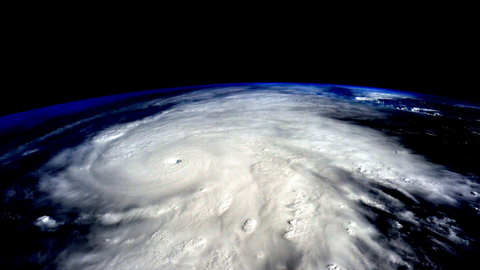
Hurricanes are nature's most destructive storms, yet the equator remains an impassable barrier to them. The reason lies in the Coriolis force, which determines the direction of storm rotation and becomes virtually nonexistent near the equator. Without this invisible force, hurricanes cannot maintain their structural integrity.
TechnologyHurricanes can destroy entire cities, topple forests and travel thousands of kilometres over oceans, yet they cannot cross the equator. This seems paradoxical: how can an imaginary line on Earth's surface stop one of nature's most powerful forces, one that carries energy equivalent to thousands of nuclear bombs?
The Coriolis Force, the Hurricane's Lifeblood
The answer lies in the Coriolis force, which arises from Earth's rotation on its axis. In the Northern Hemisphere, hurricanes rotate counterclockwise; in the Southern Hemisphere, clockwise, precisely because of this force. But at the equator, the Coriolis force virtually disappears. Without it, air masses cannot organise into a cyclone: there is no rotational impulse to hold the storm together and give it its characteristic spiral eye.
Meteorologists have observed that hurricanes rarely form less than five degrees away from the equator. This so-called "forbidden zone" is quite clearly defined, and observational data spanning decades confirm that the region on both sides of the equator remains virtually immune to major tropical cyclones.
What Happens When a Storm Gets Too Close?
If a hurricane-like storm were to move very close to the equator for any reason, it would rapidly lose its rotational energy. The cyclonic structure would collapse, winds would weaken and the storm would dissipate. In rare instances, weak tropical storms have been observed crossing the equator, but they have retained their strength only momentarily before breaking apart.
This phenomenon reminds us that our planet's most powerful natural phenomena do not operate in a vacuum, they are intimately linked to Earth's physical properties, its geometry and rotation. The equator is not merely a line on a map, but a real boundary where the planet's dynamics change fundamentally.
Open in app →