Zelensky approves 40-day influence operation to pressure Russia into ending war
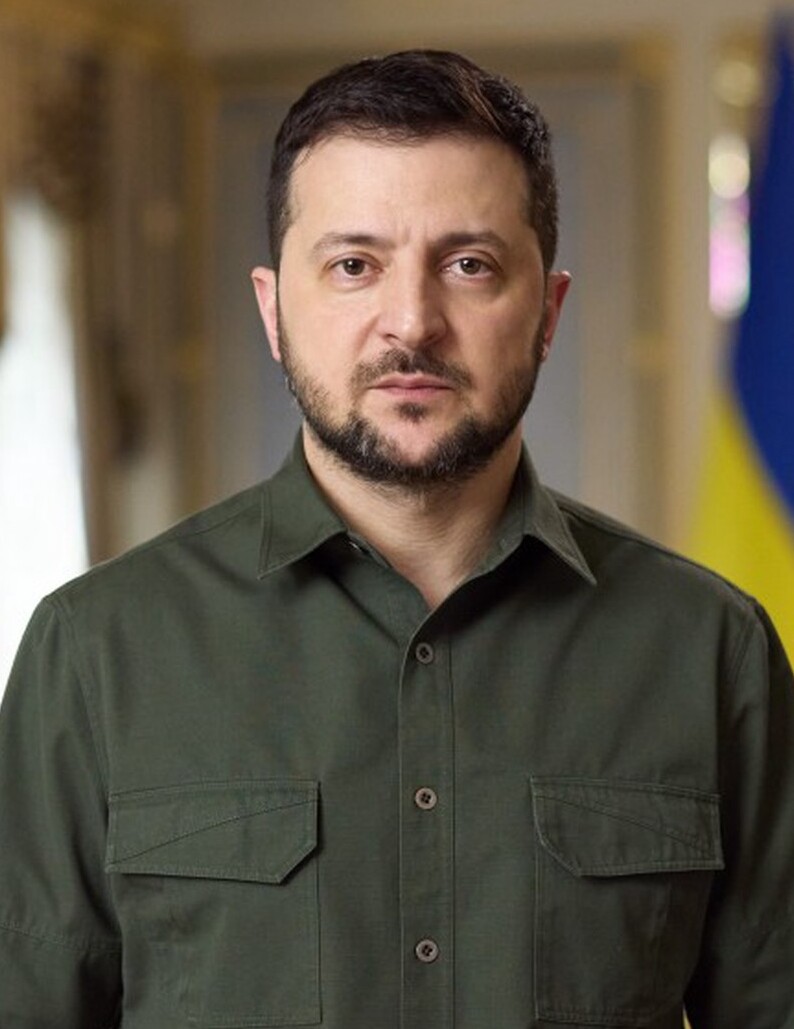
Ukrainian President Volodymyr Zelensky has approved a 40-day influence operation by Ukraine's Security Service aimed at forcing Russia to end the war. Meanwhile, Estonian Prime Minister Kristen Michal and Foreign Minister Margus Tsahkna attended the Ukraine Recovery Conference in Gdańsk, where the EU announced a €3.2 billion disbursement to Ukraine. Germany's Chancellor Friedrich Merz called on Moscow to begin peace negotiations, declaring that Russia cannot win the war.
PoliticsUkrainian President Volodymyr Zelensky has approved a 40-day influence operation by Ukraine's Security Service (SBU) targeting Russia, with the stated goal of compelling Moscow to end the war. The announcement came on Thursday, June 25, 2026, the 1,583rd day of Russia's full-scale invasion, during a briefing by Major General Yevhenii Khmara on the SBU's front-line performance and long-range operations strategy.
«I approved a 40-day influence operation for the Service against the aggressor state, the purpose of which is to force it to end the war,» Zelensky wrote on social media. He also noted that the SBU's Special Operations Centre "Alpha" has led Ukrainian units in neutralising Russian personnel and equipment over the past several months.
War on Multiple Fronts
Zelensky also claimed that Russia is redeploying air defence systems from Crimea and areas near the front line to reinforce protection of Moscow, the Valdai region, home to one of Vladimir Putin's residences, and the Kerch Strait bridge. «Russia's leadership is now pulling more air defence units to Moscow, Valdai, and Putin's bridge over the Kerch Strait, at the expense of air defences in other regions,» Zelensky said, adding that hundreds of S-400, S-500, and Pantsir launchers have been concentrated around Moscow, with roughly 90 launchers moved to the Valdai area alone and a dedicated air defence division formed there.
Ukrainian forces struck Russian oil infrastructure overnight, hitting the Poltavskaya oil depot in Krasnodar Krai, approximately 300 kilometres from the front line, and two refineries in Ufa, Bashkortostan, around 1,500 kilometres away, demonstrating the growing reach of Ukraine's long-range drone capability. Zelensky also confirmed earlier strikes on a space communications centre in Vladimir Oblast and a gas processing plant in Orenburg Oblast, with four gas processing units reportedly put out of action.
Russia's defence ministry claimed its air defences destroyed 269 Ukrainian drones overnight. In southern Ukraine, a Russian airstrike in Kherson Oblast killed two demining experts, according to regional governor Oleksandr Prokudin. In Sumy, a Russian drone strike on a petrol station wounded four people, with the regional military administration reporting 13 attacks on fuel stations in the oblast during June alone.
Gdańsk: Estonia Pushes for Faster EU Eastern Flank Funding
Estonian Prime Minister Kristen Michal attended the EU Eastern Flank summit in Gdańsk hosted by Polish Prime Minister Donald Tusk, alongside European Commission President Ursula von der Leyen and defence commissioner Andrius Kubilius. Michal stressed that the defence of the EU's eastern flank cannot wait for the next multi-annual budget period. «The recent drone incidents show that Europe must act faster, strengthen defence readiness and improve drone surveillance and countermeasures,» Michal said at the post-summit press conference, calling on the European Commission for rapid decisions and greater support.
Estonia is contributing 5.4% of GDP to defence this year, among the highest in NATO. Michal also announced that Estonia and Ukraine will co-host the next Ukraine Recovery Conference in Tallinn in 2027. «This must not be a place for making new promises, but an opportunity to demonstrate real results, implemented projects, investments made, and cities and regions restored,» he said.
Estonian Foreign Minister Margus Tsahkna also participated in the Gdańsk conference, speaking at a panel on the technological transformation of the modern battlefield. He emphasised that Ukraine's experience fighting Russian aggression is invaluable for strengthening Europe's defence. «Ukraine is fighting for the security of the entire Western world every day,» Tsahkna said, adding that the EU's €3.2 billion disbursement, the first tranche of a €90 billion loan package, was a welcome step, but that allies must continue accelerating support and increasing pressure on Russia.
French Navy Intercepts Russian Shadow Fleet Tanker
French President Emmanuel Macron announced on Thursday that the French Navy had boarded and detained the oil tanker Deliver near the coast of Sicily on June 23, after it was found to be violating maritime law. Macron described the vessel as part of Russia's so-called shadow fleet used to circumvent Western sanctions on Russian oil exports. «Another shadow fleet action, carried out just days after a similar British operation, shows Europeans' determination,» Macron wrote on social media. France has detained at least five suspected shadow fleet vessels since September 2025.
Germany Calls for Ceasefire Talks
German Chancellor Friedrich Merz, speaking at the Gdańsk conference, called on Moscow to begin peace negotiations. «Russia cannot win this war,» Merz declared. «The time has come to begin negotiations, freeze the front line and end the killing.» He described Germany's commitment to Ukraine as «unwavering» and said European NATO allies would send a strong message of continued support at the upcoming NATO summit in Ankara in early July.
In a related development, a Russian court sentenced Maxim Kruglov, deputy chairman of the anti-war opposition party Yabloko, to seven years in prison on charges of spreading «false information» about the Russian military. Belarus's defence minister Viktor Khrenin separately claimed that outside forces are making «a clear attempt» to draw Belarus into the Ukraine war, a statement that came a day after the Wall Street Journal reported Kremlin pressure on Minsk to allow its territory to be used for military operations against Ukraine or hybrid activity against NATO states.
Open in app →